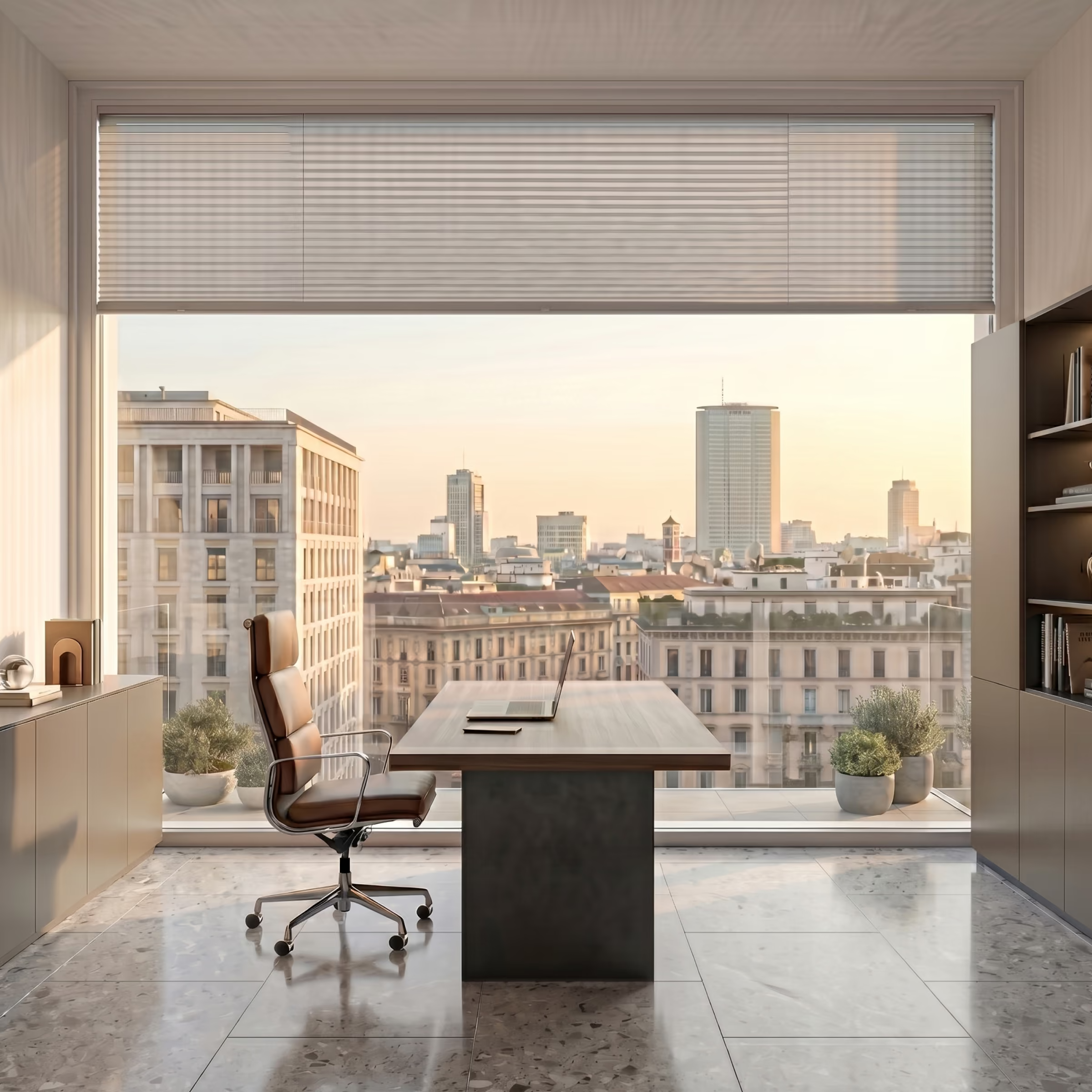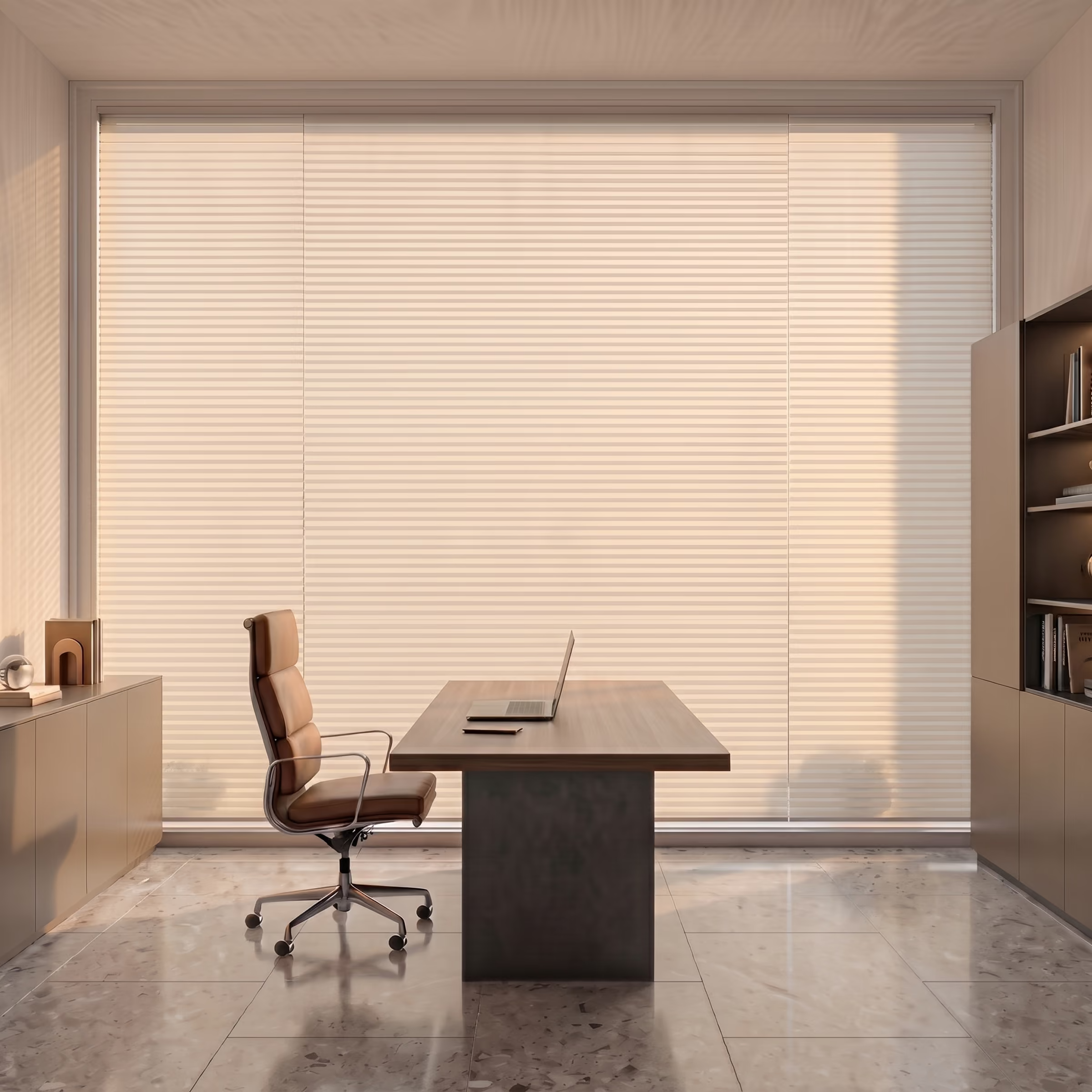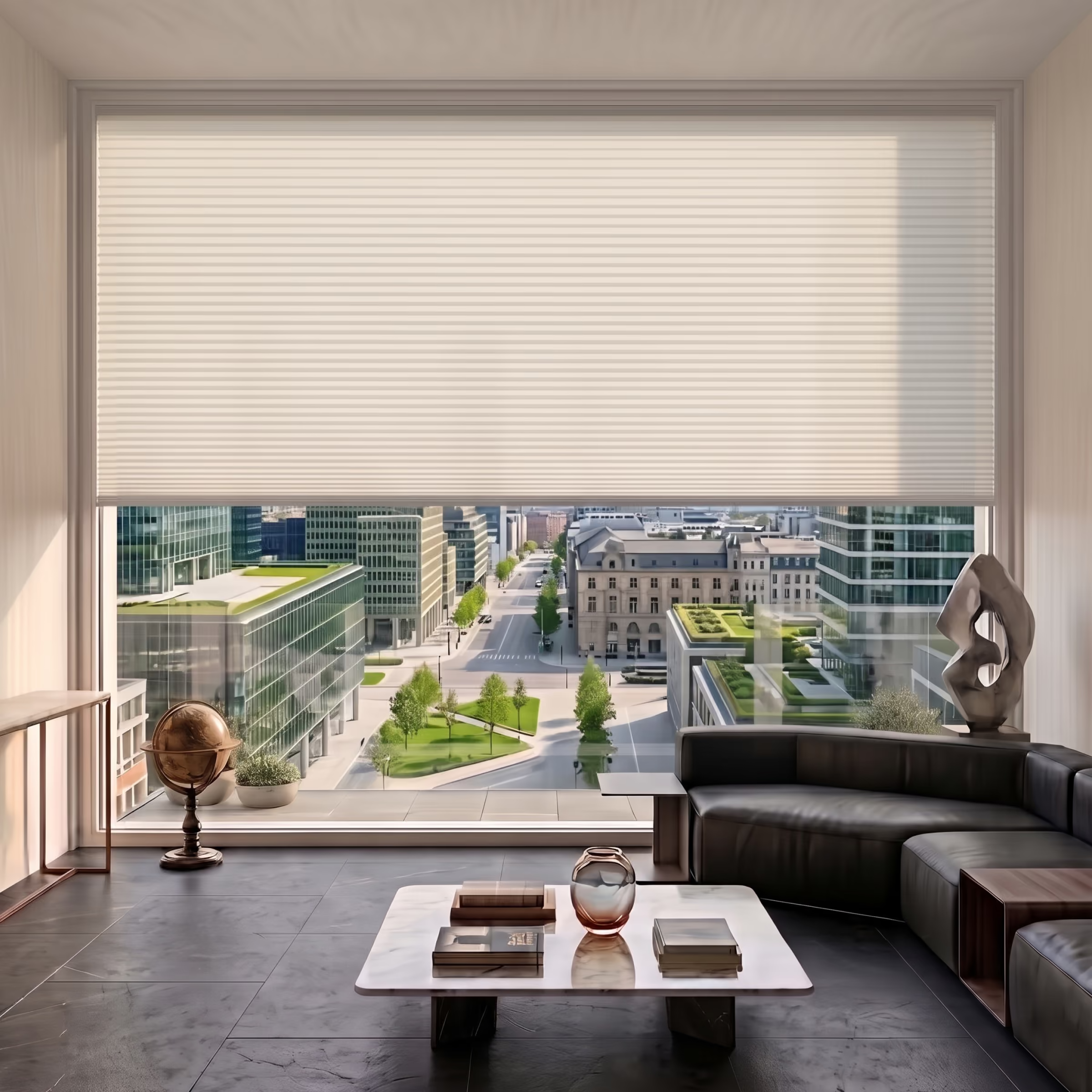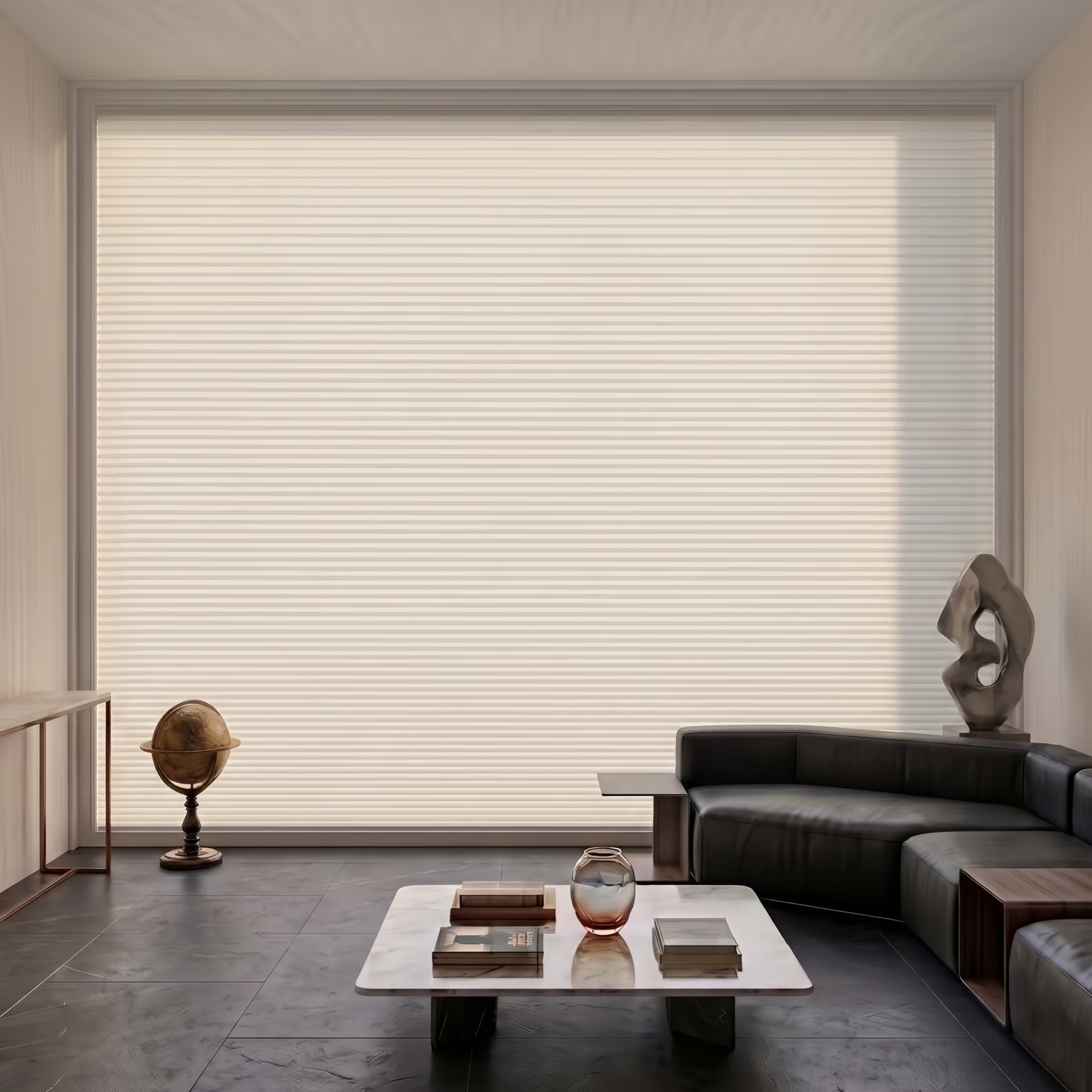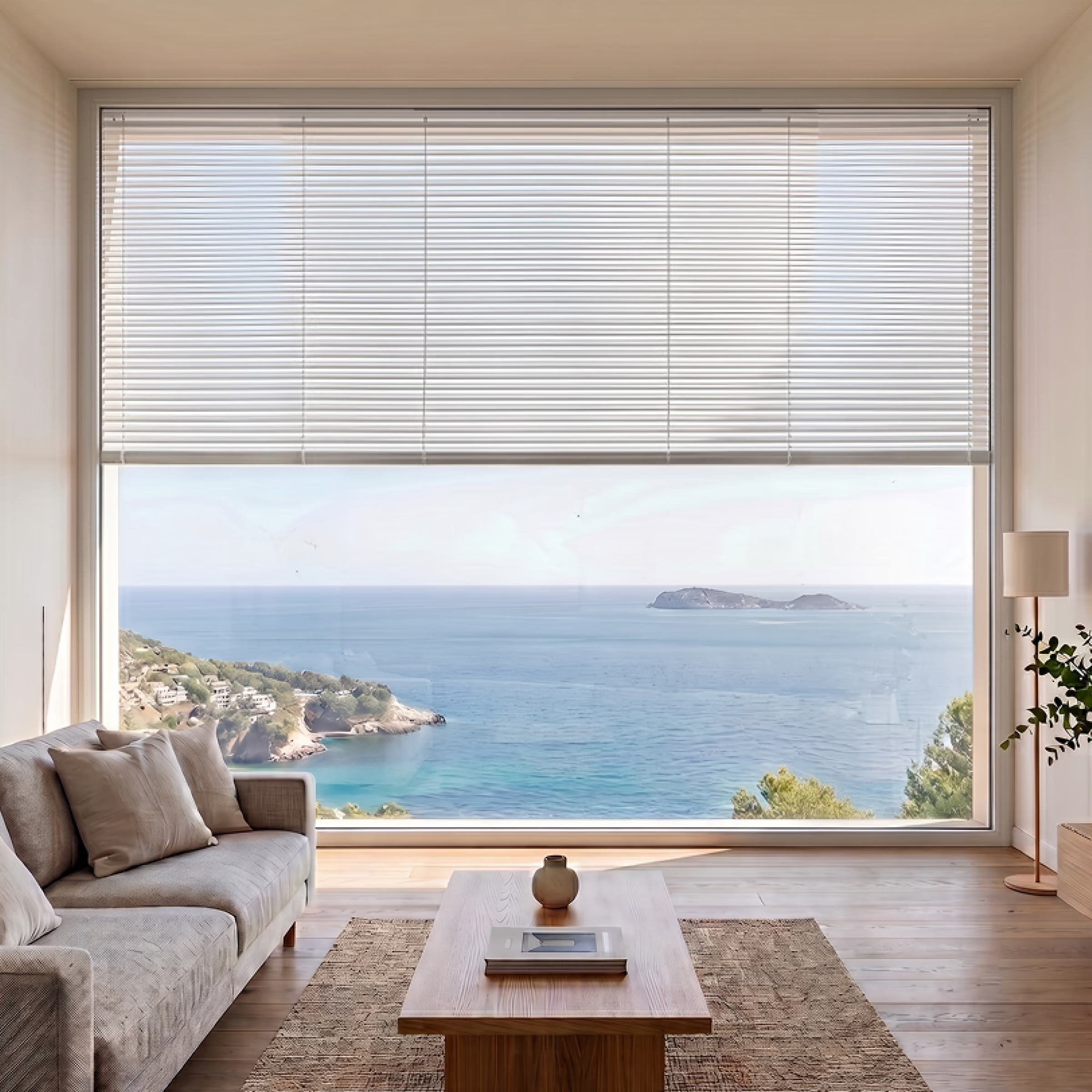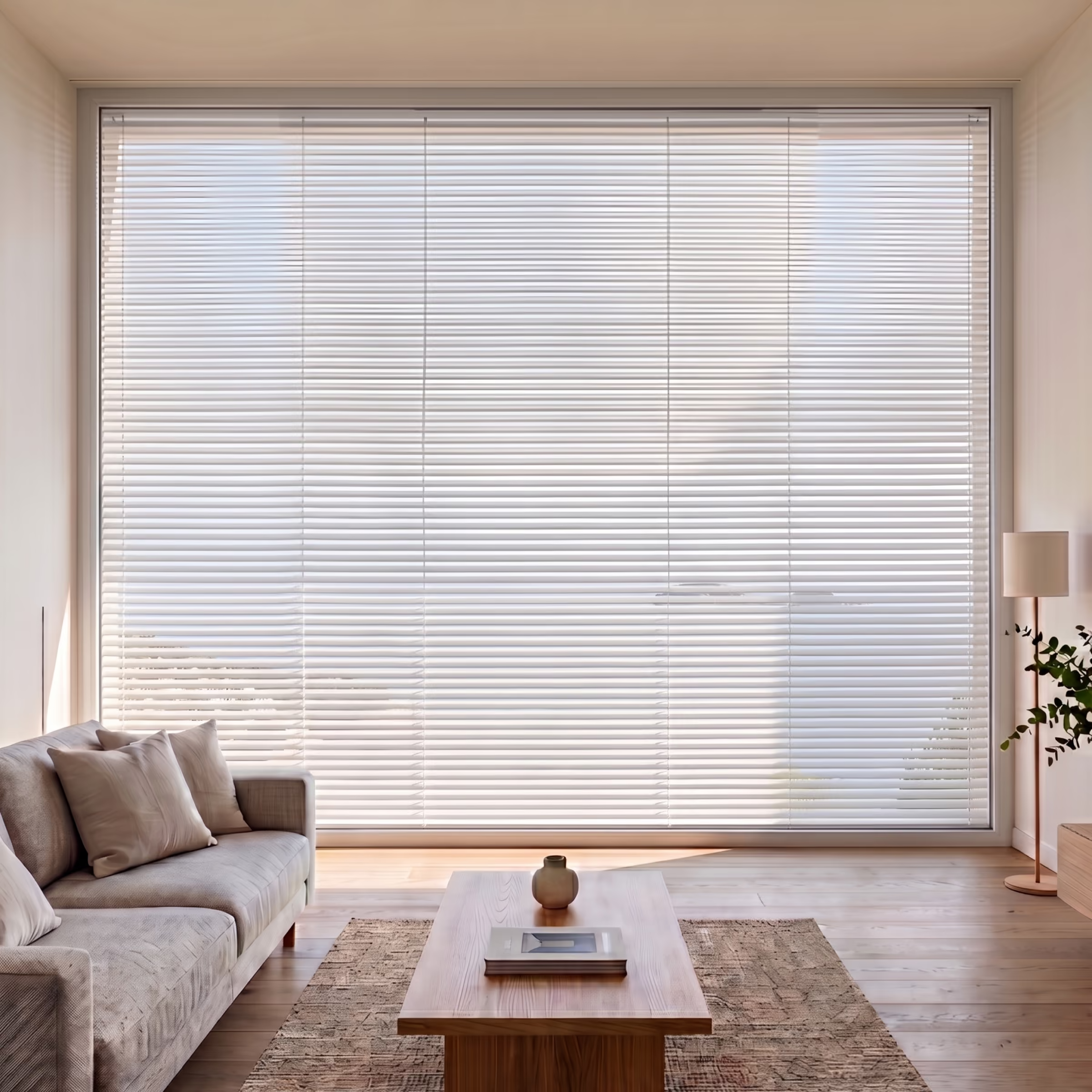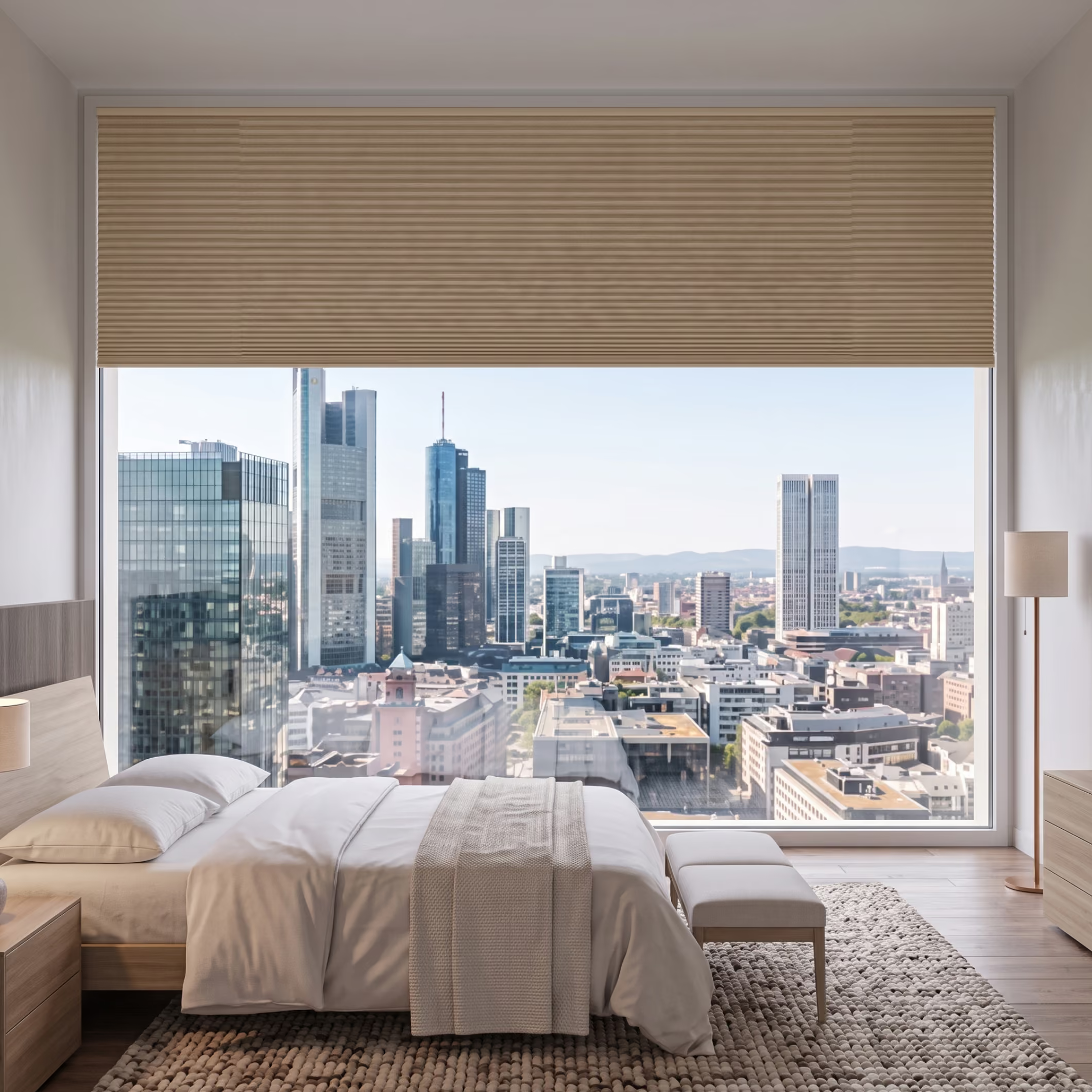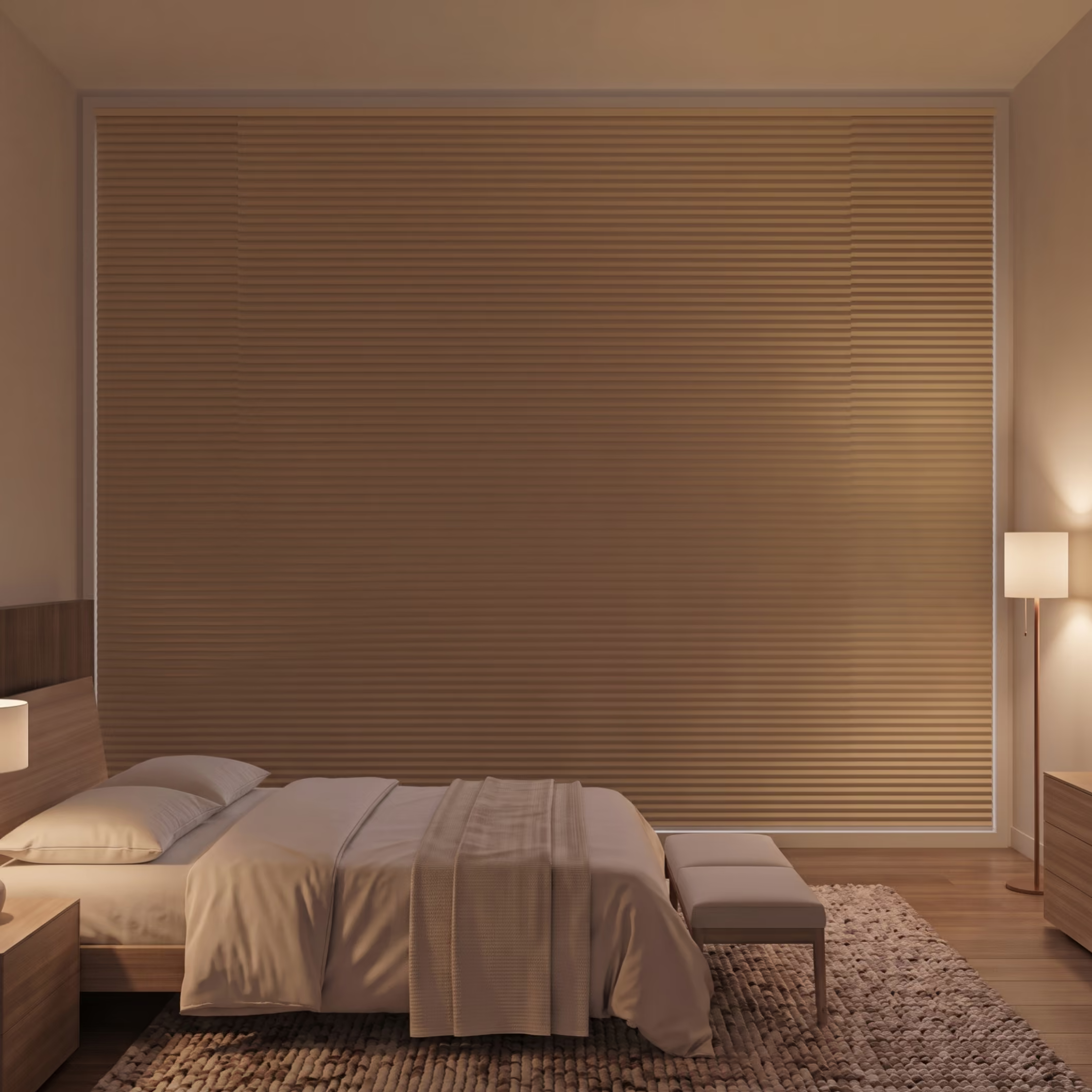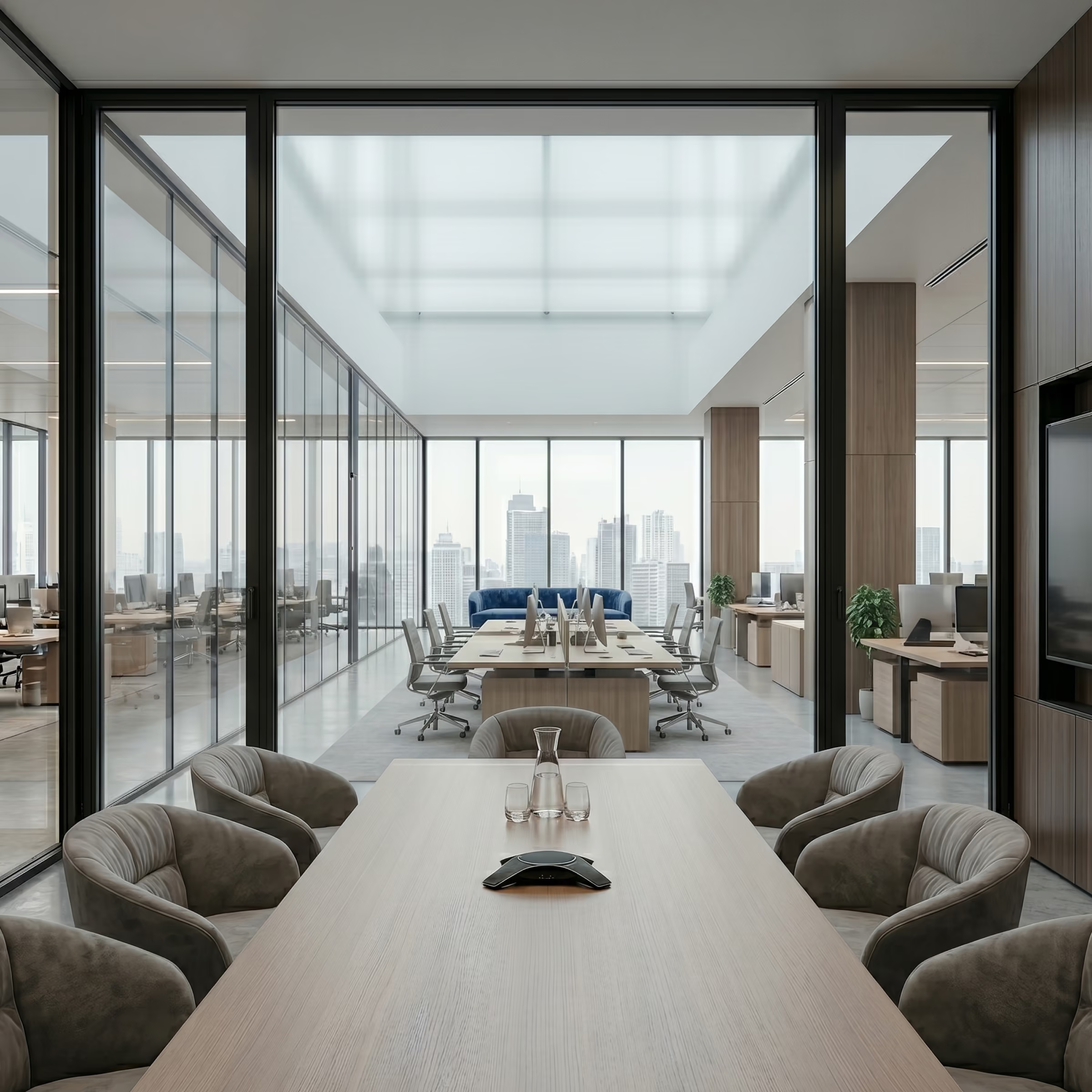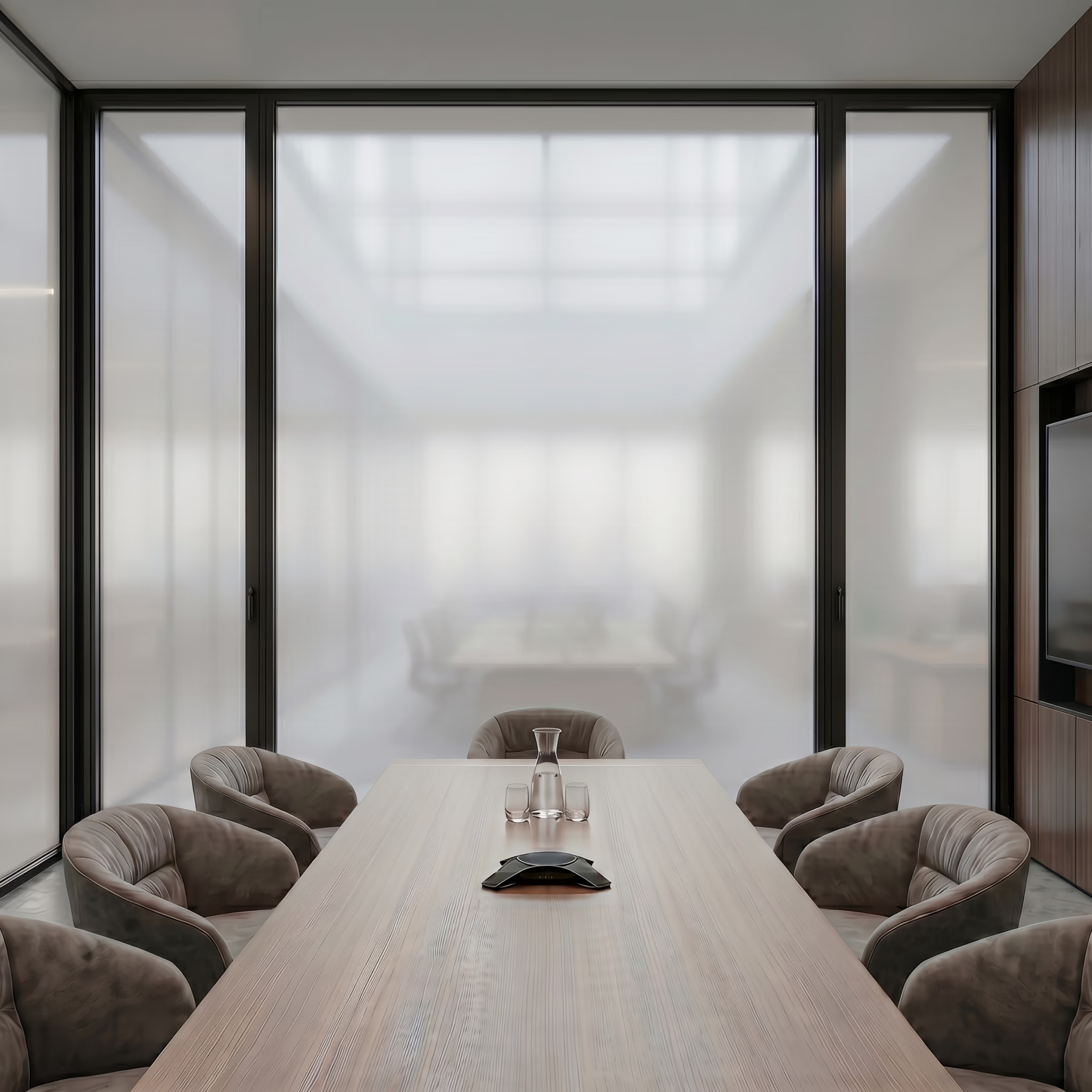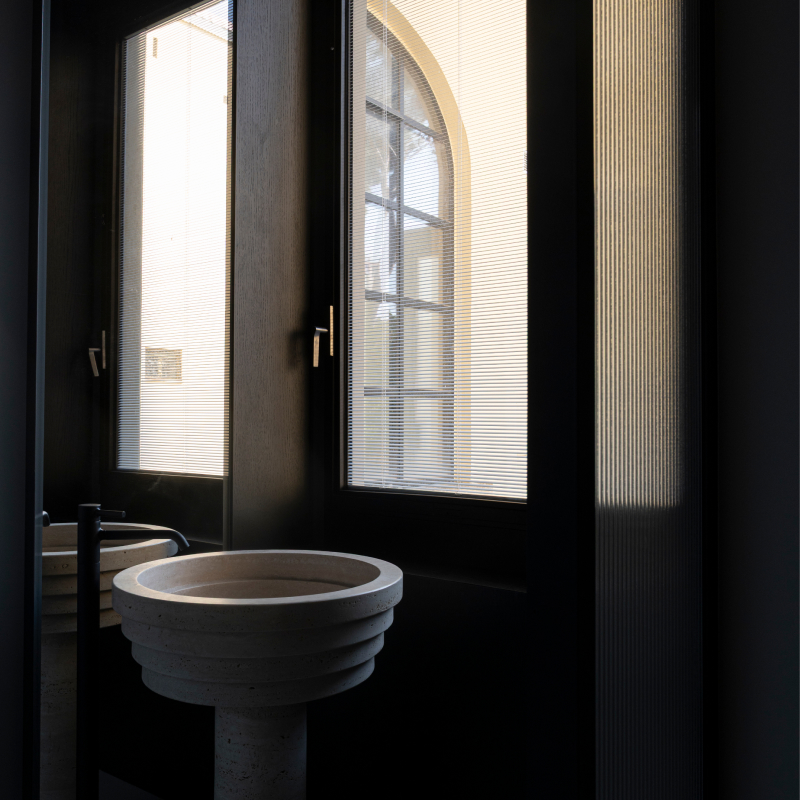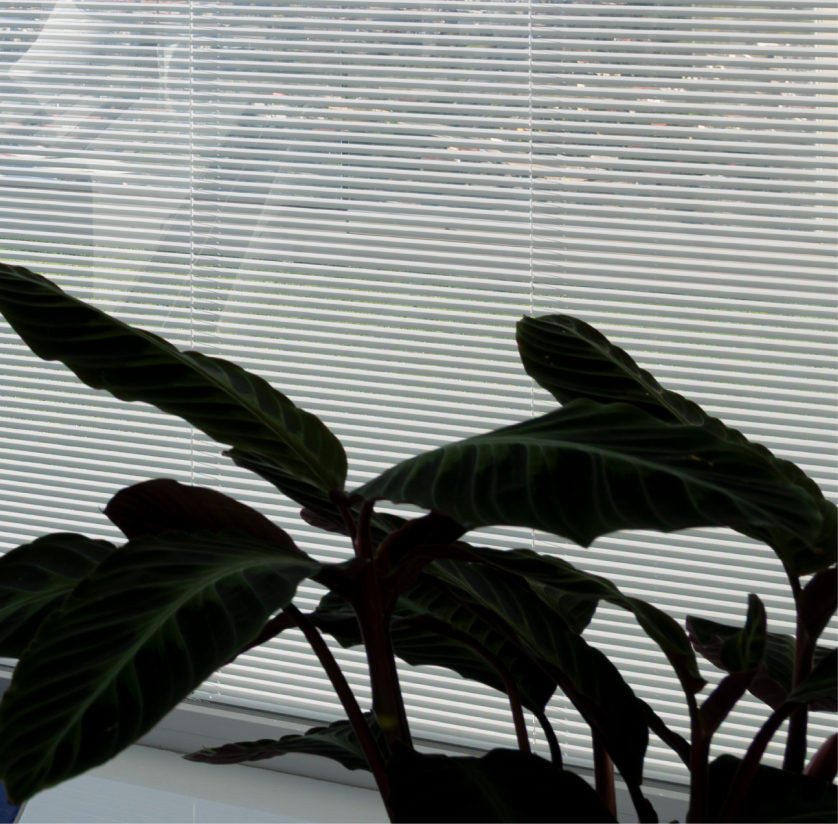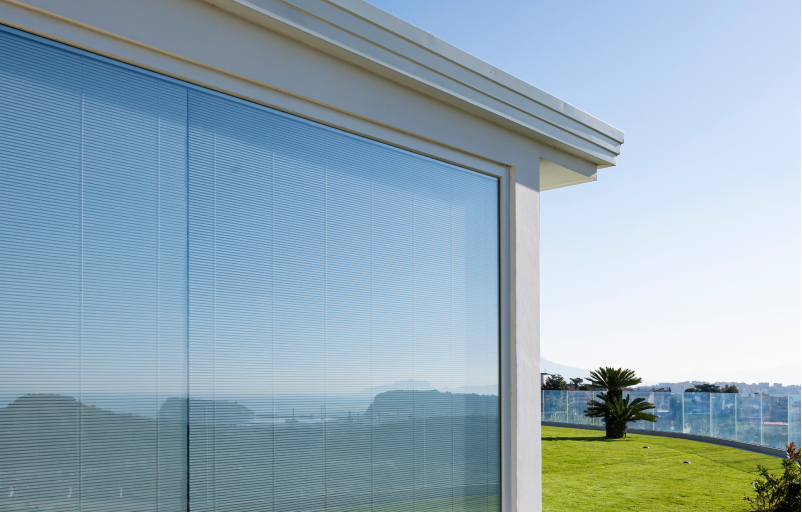
When designing windows, blinds, and solar shading, it is essential to also consider the various surfaces that the light will strike. Shading is never an isolated element: it is the brush with which we define the atmosphere, volumes, and materiality of indoor spaces.
Here are some insights from the Horizon team on how natural light interacts with the finest materials.
Integrating Venetian blinds within the insulating glass unit allows for millimetric control of light flow. When sunbeams pass through the slats, a white wall is no longer a neutral background, but becomes a dynamic canvas embroidered with sharp, geometric shadows.
If Venetian blinds work with geometry and contrast, filtering fabric shading acts through diffusion. The textile filter transforms direct sunlight into an enveloping glow, eliminating harsh shadows.
If filtering softens and Venetian blinds design, blackout shading addresses another fundamental living requirement: the perception of intimate space. Using blackout shading within the insulating glass unit does not simply mean "blocking out light," but modulating the transition between the exterior and the private realm, creating a clear visual break that enhances accent lighting and the material details of furnishings during rest hours.
Designing light means anticipating how it will render on building materials. Whether tracing rigid shadow lines or diffusing a warm glow, the Horizon insulating glass-shading system offers designers total control over the indoor atmosphere.